
See Your Client Through a Wider Lens
What if your client’s body could help you ask questions you haven’t thought to ask?
You already know how to listen to your clients’ words, emotions, and experiences.
But what about the information their bodies provide?
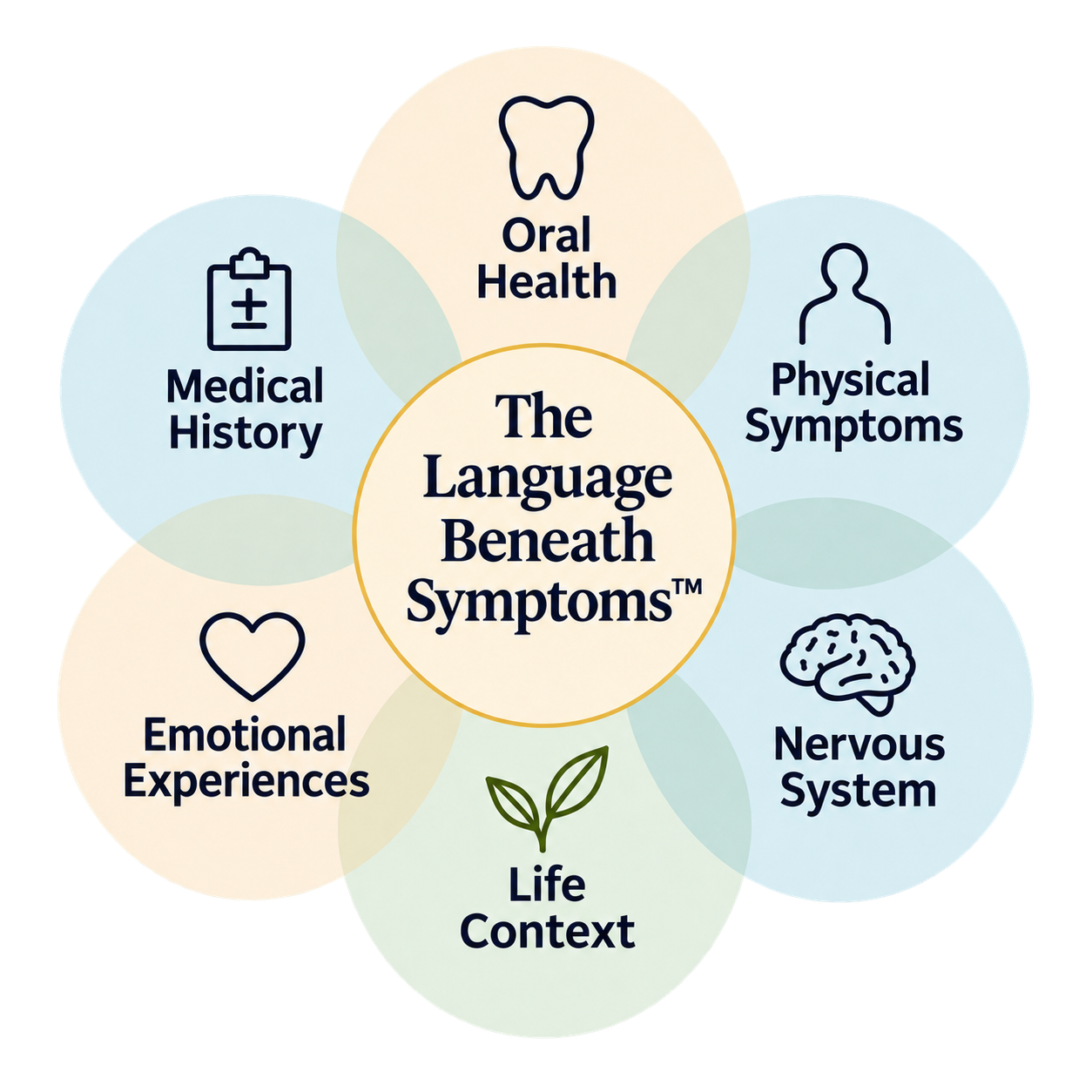
Discover a different way to explore the connections between physical symptoms, oral health, medical history, nervous system patterns, emotional experiences, and life context.
Join Dr. Isabel Pérez for an interactive workshop introducing The Language Beneath Symptoms™, an integrative framework designed to help practitioners recognize overlooked patterns and open deeper conversations.
For therapists, somatic practitioners, coaches, and integrative health professionals.
January 28 at 5pm PST | LIVE ONLINE | 90 MINUTES

What if the mouth could help you see what others overlook?
Your clients’ bodies may hold information that hasn’t yet become part of the conversation.
Discover how oral health, physical symptoms, medical history, nervous system patterns, and emotional experiences can offer a wider perspective on your clients’ stories.
The Language Beneath Symptoms™ is an integrative educational framework for therapists, somatic practitioners, coaches, and whole-person health professionals who want to recognize overlooked patterns and ask deeper questions.
Your clients’ stories don’t end with their words.
As practitioners, we learn to listen carefully.
We explore emotions, beliefs, relationships, behavioral patterns, and life experiences.
But how often do we consider the information coming from the body?
Recurring headaches. Jaw tension. Digestive discomfort. Fatigue. Sleep disturbances. Chronic pain.
These experiences deserve appropriate medical attention. They may also provide additional context for understanding a person’s stress responses, daily experiences, and overall well-being.
Yet physical symptoms, medical history, oral health, and emotional experiences are often explored separately.
What might become visible when we begin considering these pieces together?
Sometimes, a wider perspective leads to a question that changes the conversation.


An integrative educational framework that brings together:
Physical symptoms and recurring health concerns
Medical history and diagnoses
Oral health and dental findings
Nervous system responses and stress patterns
Emotional experiences and significant life events
Recurring themes across a person’s story
Rather than looking for one explanation, we explore the relationships among these areas and identify questions worth asking.
The symptom is a clue, not a conclusion.
The purpose isn’t to assign emotional meanings to symptoms. It’s to recognize possible patterns and create space for deeper understanding.
The body has a story.
Are we listening to all of it?
After nearly three decades practicing dentistry, I began noticing patterns that extended beyond the mouth.
Patients could present with similar oral conditions but have very different medical histories, emotional experiences, stress responses, and life circumstances.
I became increasingly curious about what we might discover by considering the whole person.
That curiosity led me to create The Language Beneath Symptoms™.
What if you’re missing an important piece of your client’s story?
You may already be exploring a client’s emotional experiences, relationships, beliefs, and personal history.
But what about their physical symptoms, medical diagnoses, oral health, and nervous system responses?
These observations can provide additional context that may not have entered the conversation.
Imagine a client experiencing recurring headaches, sleep difficulties, and jaw tension during a significant life transition.
Each concern has potential physical and clinical explanations.
But considering them together may also invite questions about how the person experiences stress, responds to change, and cares for themselves.

The goal isn’t to decide what caused the symptoms.
TIt’s to expand the conversation without imposing an interpretation.
This is the perspective we’ll begin practicing together.
See More. Connect the Pieces. Ask Deeper Questions.
During this interactive workshop, we’ll explore four essential areas.
1. The Body as a Source of Information
Learn to approach symptoms with curiosity while considering biological function, medical history, and relevant physical factors.
Explore how body awareness can help people notice their experiences more clearly.
3. The Mouth–Body Connection
Discover why oral health deserves a place in whole-person conversations.
Explore how dental findings, jaw tension, bruxism, and other oral concerns may contribute additional information when considered alongside the broader clinical picture.
2. Emotional Patterns & Life Experiences
Consider how stress, beliefs, relationships, recurring responses, and significant life transitions may provide context for a person’s health story.
Practice distinguishing observations from assumptions.
4. From Awareness to Deeper Questions
Learn how to bring observations together and develop thoughtful questions that invite reflection, body awareness, and meaningful conversations.
Before You Explore Your Clients’ Stories, Experience a Different Way of Listening to Your Own Body.

Understanding a framework intellectually is one thing.
Experiencing it personally can offer a different perspective.
During the workshop, I’ll guide you through a brief body-awareness and reflection exercise inspired by Whispers of the Body, my five-module experiential course.
You’ll be invited to notice:
What sensations are present in your body.
How your body responds when you bring attention to it.
What emotions or thoughts you notice alongside those sensations.
What questions arise when you approach your experience with curiosity rather than judgment.
This is an opportunity for personal observation—not an exercise in determining the cause of a symptom.
Sometimes, learning to listen differently begins with ourselves.
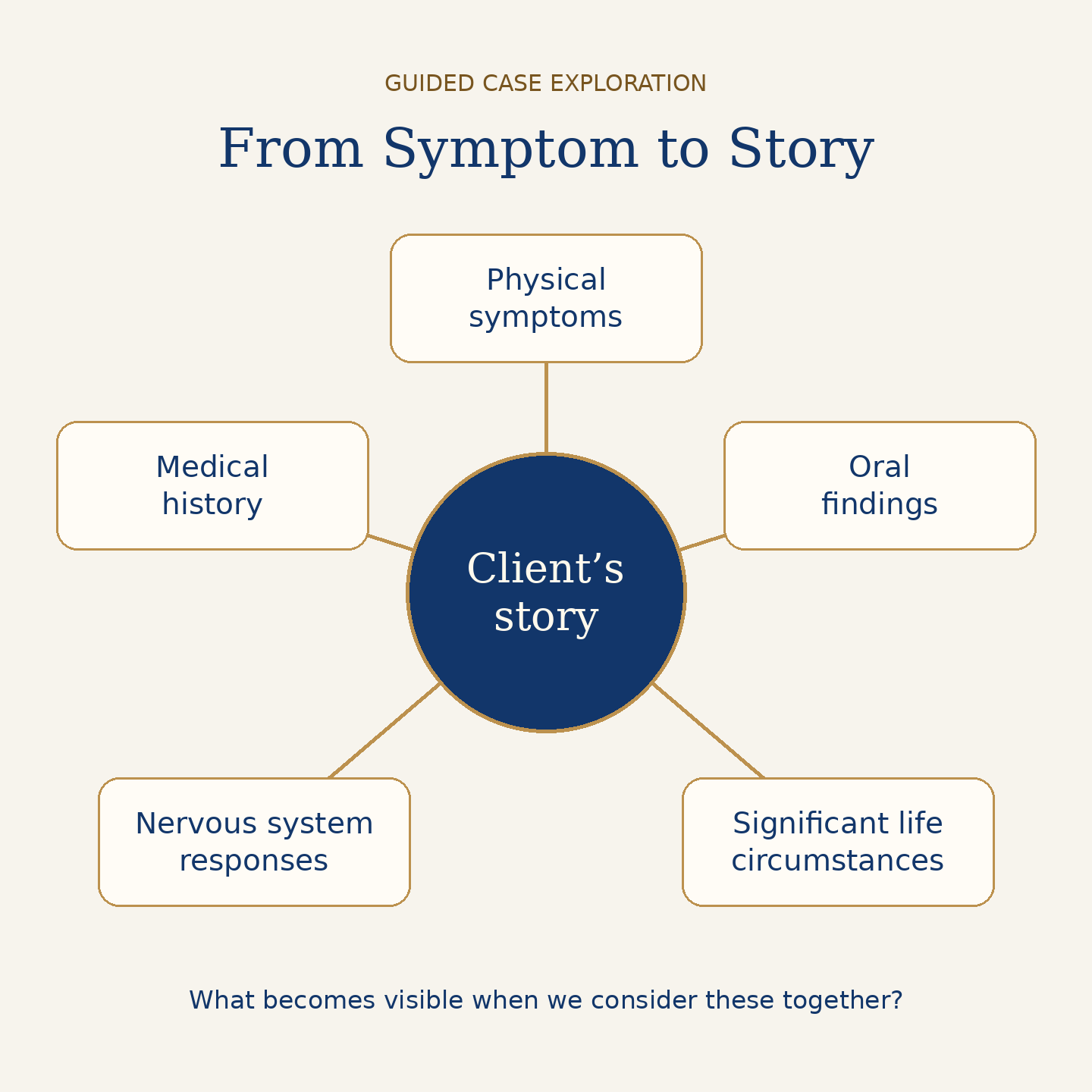
From Symptom to Story: What Changes When We Look Through a Wider Lens?
Understanding a framework intellectually is one thing.
Experiencing it personally can offer a different perspective.
During the workshop, I’ll guide you through a brief body-awareness and reflection exercise inspired by Whispers of the Body, my five-module experiential course.
You’ll be invited to notice:
What sensations are present in your body.
How your body responds when you bring attention to it.
What emotions or thoughts you notice alongside those sensations.
What questions arise when you approach your experience with curiosity rather than judgment.
This is an opportunity for personal observation—not an exercise in determining the cause of a symptom.
Sometimes, learning to listen differently begins with ourselves.
Leave With a New Way to Approach Your Clients’ Stories
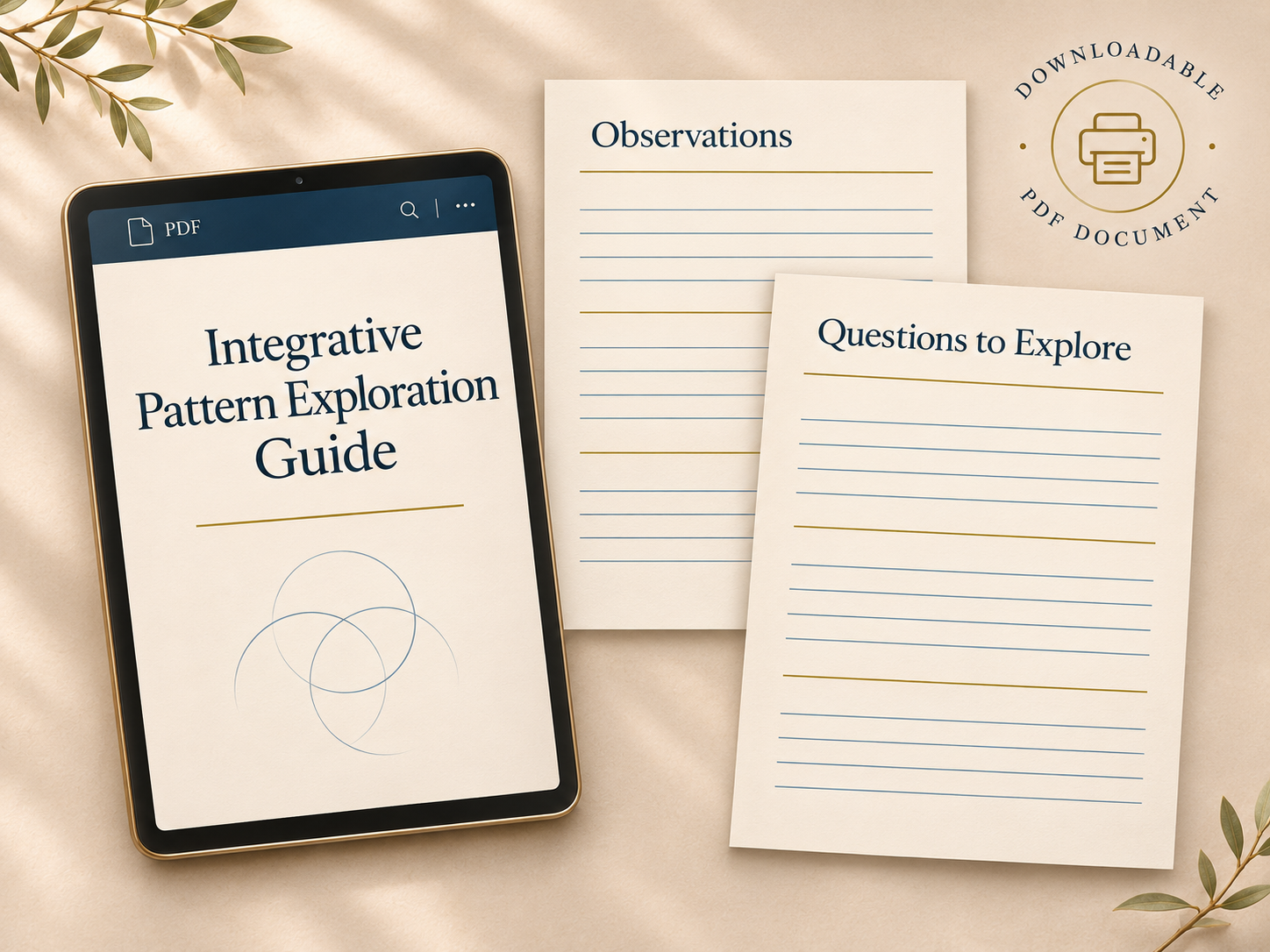
The guide will support you in:
Organizing relevant observations across the body, mouth, health history, and life context.
Recognizing possible recurring patterns.
Developing open-ended questions for deeper exploration.
Considering professional boundaries and appropriate referrals.
Reflecting on how to bring a wider perspective into your existing work.
A practical resource to revisit as you continue developing your observational and inquiry skills.
90 Minutes | Live Online
A Focused, Interactive Introduction
Part 1 — Learning to Listen Differently (15 minutes)
Explore how the body can become part of a broader conversation about health, emotions, and lived experiences.
Part 2 — Recognizing the Connections (20 minutes)
Introduce the relationships among physical symptoms, medical history, nervous system responses, emotional patterns, and oral health.
Part 3 — An Experiential Body-Awareness Practice (10 minutes)
Experience a guided reflection inspired by Whispers of the Body.
Part 4 — From Symptom to Story: Guided Case Exploration (30 minutes)
Apply a wider perspective to a client scenario and practice identifying questions worth exploring.
Part 5 — Integration & Q&A (15 minutes)
Discuss professional boundaries, collaboration, practical applications, and next steps.
For practitioners who know there’s more to the story.

Therapists & Mental Health Professionals
Bring physical and oral health observations into a broader understanding of clients’ emotional experiences and recurring patterns.

Coaches
Develop more thoughtful questions that encourage self-awareness and reflection while respecting professional boundaries.
Somatic Practitioners
Explore additional connections between nervous system responses, body sensations, oral findings, and lived experiences.

Integrative & Whole-Person Health Professionals
Recognize patterns across medical history, physical symptoms, oral health, and personal experiences to support a more comprehensive perspective.
You don’t need to become a dentist to learn from what the mouth and body may reveal.
Meet Dr. Isabel Perez
Nearly 30 Years of Clinical Experience. A Wider Way of Seeing.
I’m Dr. Isabel Pérez, a biological and integrative dentist, educator, and creator of The Language Beneath Symptoms™.
With nearly 30 years of clinical dentistry and a PhD in Integrative Medicine, my work has evolved from treating oral conditions to exploring the broader connections between the mouth, body, nervous system, and lived experiences.
My approach draws on clinical dentistry, integrative medicine, psychoneuroimmunology, somatic awareness, and years of observing patterns across patients’ health histories.
Today, I bring this perspective to therapists, somatic practitioners, coaches, and integrative health professionals through education, case exploration, and interdisciplinary collaboration.
I believe that when we understand both the biology and the story, we can care for people differently.

What Might Change If You Could See More of the Story?
Your clients bring more than symptoms into your practice.
They bring their biology, health history, nervous system responses, emotional experiences, and the circumstances of their lives.
Learning to consider these pieces together can open new conversations and expand your perspective on the people you serve.
Your Registration Includes:
Live 90-minute interactive workshop
Guided body-awareness and reflection exercise
Practical case exploration
Downloadable Integrative Pattern Exploration Guide
Live Q&A
Frequently asked questions
-
No. This workshop is designed for therapists, somatic practitioners, coaches, and integrative health professionals who want to explore a wider perspective on their clients’ experiences.
-
No. This is an introductory educational workshop. It does not qualify participants to diagnose or treat dental or medical conditions.
-
Yes. The workshop includes a guided body-awareness practice and an interactive case exploration.
-
No. This is a standalone introductory workshop that introduces The Language Beneath Symptoms™. The full practitioner training is a separate program with more extensive learning, case exploration, and integration.
-
Yes, you will receive a recording.
This workshop is educational and does not replace appropriate dental, medical, or mental health assessment and treatment.
Physical symptoms may have multiple contributing factors. Emotional experiences and life circumstances may provide relevant context but do not establish the cause of a symptom.
Participants are encouraged to apply the material within their professional scope and collaborate with qualified healthcare professionals when appropriate.