
What if the mouth could help you see what others overlook?
Your clients’ bodies may hold information that hasn’t yet become part of the conversation.
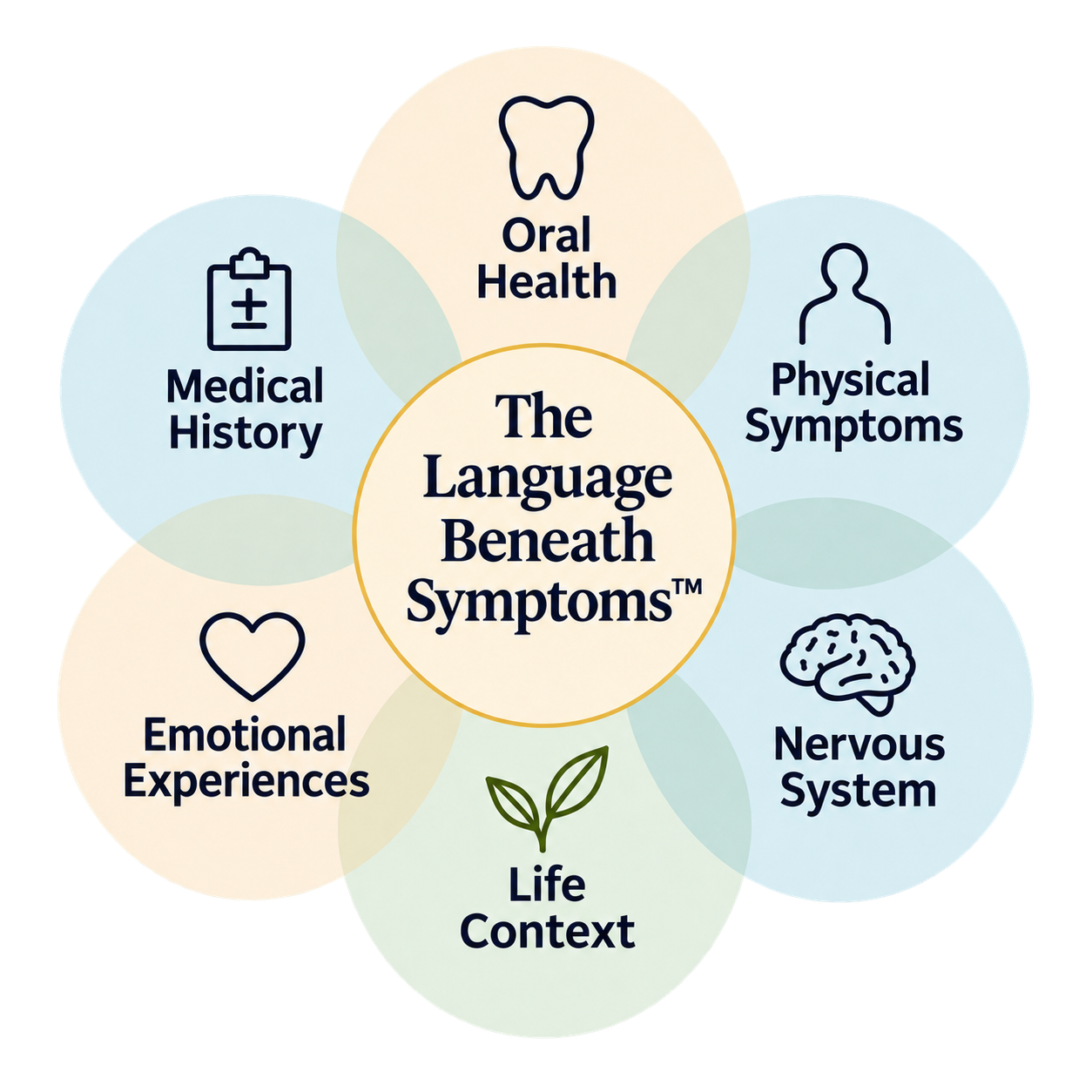
Discover how oral health, physical symptoms, medical history, nervous system patterns, and emotional experiences can offer a wider perspective on your clients’ stories.
The Language Beneath Symptoms™ is an integrative educational framework for therapists, somatic practitioners, coaches, and whole-person health professionals who want to recognize overlooked patterns and ask deeper questions.
You know how to listen to your clients. But are you seeing the whole picture?
You listen to their stories.
You recognize emotional patterns.
You explore beliefs, relationships, and past experiences.
But what about the information their bodies provide?
Jaw tension. Bruxism. Chronic pain. Digestive symptoms. Fatigue. Recurring health concerns.
These symptoms deserve appropriate clinical evaluation. They may also provide additional context for understanding how someone experiences stress, responds to life’s challenges, and adapts over time.
Yet oral health, medical history, physical symptoms, and emotional experiences are often explored separately.
What might become visible when we begin connecting these pieces?


An integrative educational framework that brings together:
Oral health and dental findings
Physical symptoms and recurring health concerns
Medical history and diagnoses
Nervous system responses
Emotional experiences and life transitions
Recurring patterns across a person’s story
The purpose isn’t to decide what a symptom means.
It’s to recognize possible connections, consider what may have been overlooked, and discover questions that open deeper conversations.
Because sometimes, understanding more begins with asking something different
The mouth never speaks alone.
After nearly 30 years practicing dentistry, I began noticing something that changed how I looked at health.
Patients could present with similar oral conditions but have very different medical histories, stress responses, emotional experiences, and life circumstances.
I became curious about what we might discover by looking beyond the presenting symptom.
That curiosity led me to create The Language Beneath Symptoms™.
What makes it different?
From isolated symptoms to a more complete story.
Imagine a client who experiences chronic jaw tension.
You might already be exploring anxiety, stress, relationships, and emotional experiences.
But what if you also knew about their bruxism, sleep disturbances, recurring headaches, dental history, and other physical symptoms?
What additional questions might emerge?
Perhaps you begin exploring:
What happens in your body when you feel responsible for everyone?
When do you notice yourself holding tension?
What does your body tend to do when you feel under pressure?
These questions don’t establish the cause of the jaw tension.

They create opportunities for deeper exploration.
The Language Beneath Symptoms™ helps practitioners expand their observations without imposing emotional interpretations or moving beyond their professional scope.
The symptom is a clue, not a conclusion.
A Different Way to Listen
Meet Dr. Isabel Pérez and discover the perspective behind The Language Beneath Symptoms™.
In this short introduction, I share how nearly three decades in dentistry led me to explore connections between oral health, physical symptoms, the nervous system, and lived experiences—and why I believe these observations can enrich the work of therapists and other practitioners.
Better Questions. Deeper Conversations.
1. Look Beyond the Symptom
Begin with the clinical picture. Consider physical symptoms, oral findings, medical history, diagnoses, and biological function.
3. Ask Deeper Questions
Use these observations to open conversations about emotional patterns, stress responses, relationships, and significant experiences—without assuming a particular cause.
2. Recognize the Patterns
Look for recurring observations across the mouth, body, nervous system, emotional experiences, and life context.
4. Support Meaningful Integration
Help clients develop awareness of their responses and explore practical ways to apply new insights within your professional scope.
We don’t need to assign meaning to every symptom. We need to become more curious about the person experiencing it.
For practitioners who know there’s more to the story.

Therapists & Mental Health Professionals
Bring physical and oral health observations into a broader understanding of clients’ emotional experiences and recurring patterns.

Coaches
Develop more thoughtful questions that encourage self-awareness and reflection while respecting professional boundaries.
Somatic Practitioners
Explore additional connections between nervous system responses, body sensations, oral findings, and lived experiences.

Integrative & Whole-Person Health Professionals
Recognize patterns across medical history, physical symptoms, oral health, and personal experiences to support a more comprehensive perspective.

Meet Dr. Isabel Perez
Nearly 30 Years of Clinical Experience. A Wider Way of Seeing.
I’m Dr. Isabel Pérez, a biological and integrative dentist, educator, and creator of The Language Beneath Symptoms™.
With nearly 30 years of clinical dentistry and a PhD in Integrative Medicine, my work has evolved from treating oral conditions to exploring the broader connections between the mouth, body, nervous system, and lived experiences.
My approach draws on clinical dentistry, integrative medicine, psychoneuroimmunology, somatic awareness, and years of observing patterns across patients’ health histories.
Today, I bring this perspective to therapists, somatic practitioners, coaches, and integrative health professionals through education, case exploration, and interdisciplinary collaboration.
I believe that when we understand both the biology and the story, we can care for people differently.

INTRODUCING
The Language Beneath Symptoms™
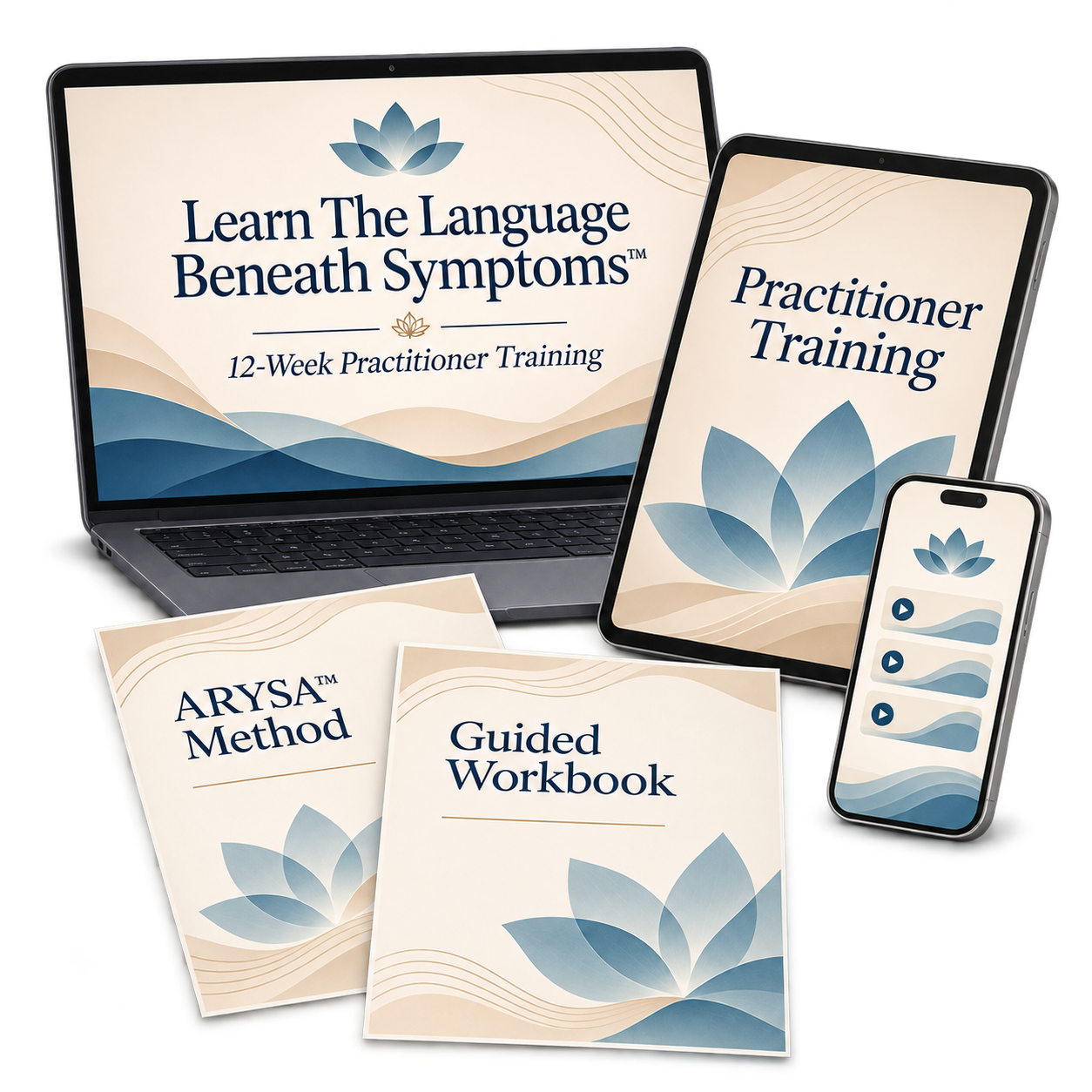
A 12-Week Practitioner Training Program
Learn to recognize what may be missing from your clients’ stories.
This training goes beyond learning new concepts.
It’s an opportunity to experience the framework personally, expand your understanding of mouth–body connections, and develop practical ways to bring this perspective into your professional work.
You’ll explore how to recognize patterns across physical symptoms, medical and dental history, nervous system responses, emotional experiences, and life context.
You’ll also learn how to turn these observations into thoughtful questions that invite deeper exploration without assigning fixed meanings to symptoms.
The training incorporates the ARYSA™ Method, a five-step framework for awareness, pattern recognition, body-based listening, somatic integration, and personal alignment.
What You’ll Experience

5 Self-Paced Foundational Modules
From Whispers of the Body, designed for personal introspection and experiential learning. Experience the principles yourself before bringing them into your work with clients.

5 Guided Workbooks
Reflective exercises that support personal awareness and integration.

6 Live Group Sessions with Dr. Isabel Pérez
Two-hour interactive sessions for learning, discussion, case exploration, and practical application.

Case Exploration & Pattern Recognition
Learn to examine information from multiple areas of a client’s health story and identify questions worth exploring.

Weekly Integration Exercises
Practice applying the framework through reflection, observation, and structured exercises.

Somatic Integration Practices
Explore body awareness and regulation practices to support personal and professional integration.

Private Practitioner Community
Connect with other professionals interested in a wider, whole-person perspective.
What You’ll Take Away
By the end of the training, you’ll have a framework to help you:
Recognize possible connections between oral health, physical symptoms, medical history, and emotional experiences.
Ask deeper questions without imposing interpretations.
Explore client cases through a broader, integrative lens.
Incorporate body awareness and somatic reflection into your existing approach.
Collaborate more thoughtfully with other healthcare professionals.
Bring greater curiosity and confidence into your work with clients.
You already know how to listen to your clients. This training invites you to notice what else may be part of their story.
Enrollment is not yet open. Join the waitlist to receive early updates, upcoming learning opportunities, and priority notification when registration begins.

What might change if you could see more of the story?
Your clients bring more than symptoms into your practice.
They bring their biology, health history, nervous system responses, emotional experiences, and the circumstances of their lives.
Learning to recognize how these pieces may intersect can open new conversations and a wider perspective on the people you serve.
Discover The Language Beneath Symptoms™.
Join a growing community of practitioners curious about the connections between the mouth, body, emotions, and human experience.